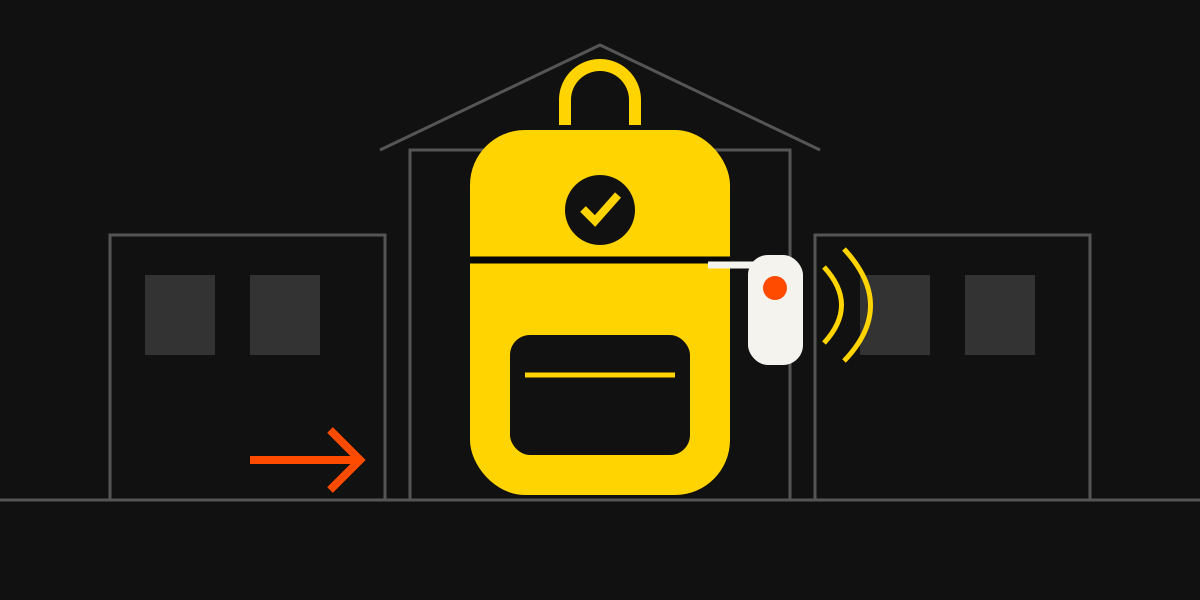

The goal is to escape, not to injure. Personal safety tools are intended to help you create an opportunity to get away from an attacker and reach safety. They are not for punishment, retaliation, or causing unnecessary bodily harm. They can still cause serious injury, so understand their risks, follow the product instructions, and focus on getting away and getting help.
A personal safety tool can give you an option when a situation feels wrong. But the most useful part of your plan starts before you ever reach for a device: notice what is happening, keep space between you and a threat, and know where you can go for help. The goal is to get home safely.
Picture the end of an evening shift. You step outside and notice someone following your route. You do not know their intentions, and you do not need to wait for certainty before changing your plans. You can turn toward an open business, ask a coworker to walk with you, or call for help. That is preparedness in action. You have made room for a safer choice before a confrontation starts.
This is an illustrative situation, not a customer account. The guide below explains how non-lethal self-defense tools fit into that same escape-first approach.
1. Make getting away the plan
Before choosing a device, think about the places you move through each day. Where is the nearest staffed business? Is there a well-lit route from your workplace to your car? Who could you call if your plans change? A tool is easier to fit into a routine when that routine already includes somewhere to go.
If someone makes you uncomfortable, you can change direction, move toward other people, or leave. You do not owe a stranger a conversation. When it feels safe to speak, a clear boundary such as “Stay back” or “I need help” can tell people nearby that something is wrong. Avoid trading insults or staying to prove a point.
If there is an immediate threat, call 911 as soon as you can safely do so. Move toward a staffed, public place when possible, and avoid leading a person who is following you to your home. If an exit is open, take it rather than stopping to retrieve equipment.
Products sold as non-lethal can still cause serious harm. “Less-lethal” is a more careful description for force devices because risk remains. Carrying one does not make a dangerous encounter safe, and no device guarantees that someone will stop.
2. Use a personal alarm to draw attention
A personal alarm is meant to make noise and draw attention. Depending on the model, you may activate it by pulling a pin or pressing a button. Learn the action on your own device before carrying it. A small alarm clipped where you can reach it is more useful than one buried under everything in your bag.
If you need help, activate the alarm and move toward people or a safe exit. If you can speak, give a clear request: “Please call 911.” Directing that request to a specific nearby person can make your need easier to understand. Keep moving when it is safe; you do not need to stay beside the threat waiting for a response.
An alarm cannot physically stop an attacker. People may not hear it, may misunderstand the sound, or may not respond. Unless the product specifically includes a connected emergency service, sounding it does not call the police. Treat it as one way to attract attention while you carry out your escape plan.
Explore our personal safety alarm guide for everyday carry considerations.

3. Understand pepper spray before you carry it
Pepper spray is intended to cause irritation that may create an opportunity to escape. It can also affect you, bystanders, children, or pets. Wind, confined spaces, and accidental discharge matter. Do not assume every canister has the same range, spray pattern, safety lock, or instructions.
Start with the instructions supplied with the exact product. Know how its safety works, how it must be stored, and when it expires. Keep the nozzle pointed away from yourself and others when handling it. Never experiment with live spray indoors or use a friend as a practice target.
For safe familiarization, ask a qualified instructor about an inert practice unit that matches your device. Practice should help you recognize the controls and move toward an exit, without exposing anyone to an irritant. Do not improvise a live test because a video makes it look easy.
SABRE’s testing and expiration guidance specifically warns that wind can blow spray back toward the user. Follow your own manufacturer’s directions, even if another brand gives different advice.
If a defensive use creates an opening, leave and seek help. Do not remain to see how long the effect lasts, chase someone, or use spray to settle an argument. Review our pepper spray laws guide and confirm current local requirements before buying or carrying.

4. Let a flashlight help you see your way out
A flashlight can help you see a dark walkway, find your keys, or identify an obstacle between you and an exit. Those everyday jobs matter. A clear view can help you choose a different route before you enter a place that feels unsafe.
Choose a light you can operate comfortably. Find its main switch by touch, check the battery, and learn how to return to a steady beam if it has several modes. A complicated sequence of clicks is less useful than a control you understand. Keep the beam away from drivers and avoid shining it into people’s eyes as a test.
Do not rely on claims that brightness alone will stop an attacker. A flashlight does not create a barrier or guarantee time to escape. Use it to support visibility and movement. A phone light can be helpful too, but using it may mean holding the same device you need to call for help.
5. Know the limits of stun devices
A contact stun gun requires close proximity. That is a serious limitation when your main goal is distance. It is also different from a device that fires probes. Do not assume a contact model will have the same effects you have seen in demonstrations of other electrical devices.
A loud electrical sound or a dramatic voltage claim does not promise that a person will be stopped. Electrical weapons can cause injuries, including injuries from falls. Do not test one on yourself, another person, or an animal, and do not move closer to a threat merely to use a device.
If you are considering one, read the exact product’s instructions and seek qualified, device-specific training. Check storage requirements and keep it secured from children. Our stun gun laws guide can help you identify questions to verify locally. If you are uncomfortable with a tool’s risks or controls, choose a different approach to your safety plan.

6. Build a routine you can actually follow
Start with one manageable carry plan. Decide where your alarm or other permitted device will sit and check that you can reach it with the clothing and bag you normally use. A pocket that works in a winter coat may not exist in your summer clothes. A tool attached to a bag is unavailable when the bag is left behind.
Practice locating the device without activating it. Use an inert trainer when appropriate, and follow the manufacturer’s safety instructions for any check. Never rehearse by pointing a live device at someone. A qualified instructor can help adapt practice to your grip, reach, mobility, and daily routine.
Check batteries, charging needs, clips, and expiration dates on a regular schedule. Replace a damaged unit according to its instructions. Store defensive devices securely when you are not carrying them, especially where children or visitors could reach them. Accessibility for you should not mean unrestricted access for everyone.
Plan ahead for places with entry restrictions. Rules can differ between work, school, public buildings, events, and travel. A product being available online does not establish that you can carry it at your destination. Confirm the rules with the relevant authority before you leave, rather than discovering a restriction at the entrance.
7. Get help after you reach safety
Once you are away, stay in a safe place and contact emergency services if there is danger, injury, or a crime to report. Give your location first and describe what happened clearly. Follow the dispatcher’s instructions. Do not return to the scene to recover belongings or confront the person.
If pepper spray affects you, move away from the contaminated area into fresh air and avoid rubbing your eyes. Poison Control explains the risks of pepper spray exposure and recommends fresh air and prompt decontamination. In the U.S., call Poison Control at 1-800-222-1222 for advice specific to the exposure. Call 911 for trouble breathing or another severe reaction.
When you can do so safely, write down what you remember and preserve relevant messages or recordings. Ask a trusted person to stay with you if that would help. Seeking medical care or support after a frightening encounter is part of looking after yourself.
Your everyday readiness check
Before heading out, ask yourself:
- Do I know a safe route and somewhere I could ask for help?
- Is my phone charged and easy to reach?
- Is my chosen device allowed where I am going?
- Can I reach it without searching through my bag?
- Have I checked its controls, condition, and power or expiration needs?
- Do I understand its limits and how I would move away?
If an answer is no, adjust the plan. That might mean walking with a coworker, taking another route, charging a device, or leaving a restricted item securely at home. Preparedness is a series of ordinary choices. You do not have to carry every type of tool, and buying more equipment does not replace knowing what you already own.
Choose tools that fit your life
Safety Tech Devices offers personal safety products including alarms, pepper spray, and stun devices. Start with your routine and the controls you feel comfortable learning. Read the individual product details, confirm restrictions, and choose with care.
Our personal safety collection lets you explore the available options. Use the Safety Guide to think through accessibility, familiarity, and layers of preparation. The purpose of a tool is to support your plan to get away and get help.
Questions about everyday self-defense tools
What is the best non-lethal self-defense tool for a beginner?
There is no single best tool for everyone. Consider what is permitted, what you can reach and operate comfortably, and what you are willing to practice with safely. A personal alarm can draw attention without chemical or electrical contact, but it does not physically stop a threat. Start with an escape plan and learn the limits of any device you choose.
Will a personal alarm call the police?
A basic sound-only personal alarm does not call the police. It makes noise to draw attention. Only a product with a specifically described connected emergency feature may contact a service. Check the exact model’s instructions and call 911 yourself when it is safe to do so.
Can I carry pepper spray everywhere?
Do not assume that you can. Requirements and restrictions vary by location, venue, and travel method. Check current official rules for your destination and the places you pass through. Our pepper spray laws guide offers a starting point for those checks.
Should I stay after using a defensive tool?
If you can safely escape an immediate threat, move to safety and contact emergency services. Do not chase the person or stay to test whether a device worked. Follow the dispatcher’s instructions and seek medical help for injuries or significant exposure.